FIELD NOTE
What Makes a Business Process Ready, or Not Ready, for AI Agents?
A practical framework to decide if a business process is ready for AI agents. Learn how to map workflows, classify steps, and govern human-in-the-loop AI.

A business process is ready for AI agents only when its objective, inputs, decisions, handoffs, systems, permissions, and evidence are explicitly mapped, and when every consequential action still has a named human owner and an approval or escalation path. Readiness is not about the technology; it is about the clarity of the operating model. In this article, I explain a three-category framework and a step-by-step mapping method for founders and operators.
The Three Categories: Human Only, AI Assisted, Agent Executable
Before automating anything, classify each step in a workflow into one of three categories. Human only steps involve judgment, accountability, or legal responsibility that cannot be delegated to a machine. AI assisted steps use AI to draft, summarise, or recommend, but a human reviews and approves before anything moves forward. Agent executable steps are fully automatable because the rules are explicit, the data is structured, and the risk of error is low or easily reversible.

This classification is the core of a human-led AI operating model. It keeps humans accountable for consequential decisions while allowing agents to handle repetitive, well-defined tasks. Without this model, teams either over-automate and create compliance or quality failures, or under-automate and miss the efficiency gains that agents can safely deliver.

For example, an inbound lead qualification workflow might include a step where an agent enriches a CRM record from a web form. That step is agent executable because the input is structured and the action is reversible. But the step where a sales representative decides whether to offer a discount is human only, because it requires commercial judgment and relationship context. The step where an agent drafts a follow-up email is AI assisted, because a human must review tone and accuracy before sending.

A Step-by-Step Way to Map One Workflow (Illustration: Inbound Lead)
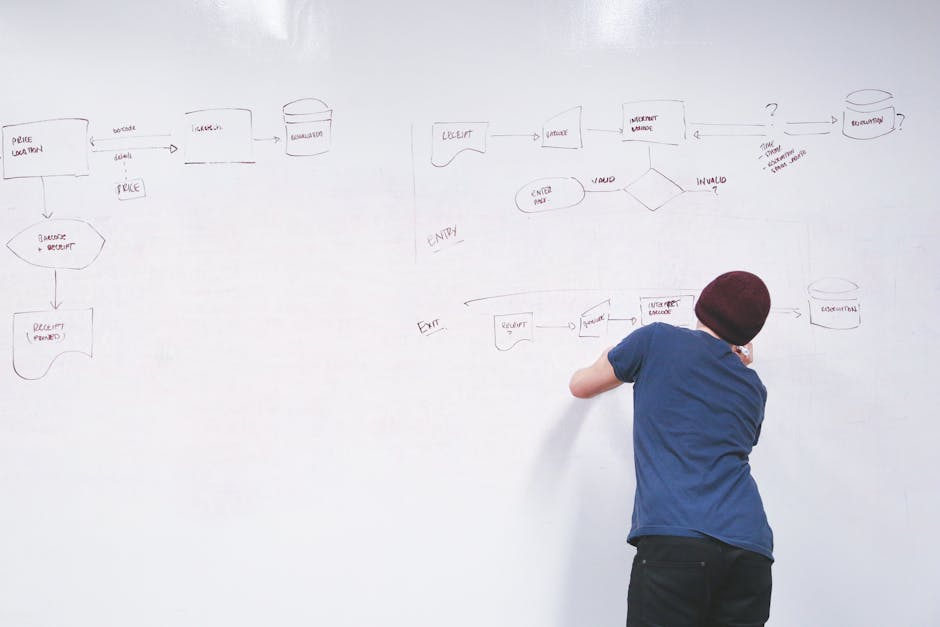
To decide whether a process is ready for agents, map it end to end. I use a simple seven-field template: objective, inputs, decisions, handoffs, systems, permissions, and evidence. Here is how that looks for an inbound lead workflow, clearly labelled as an illustration and not a client result.

- Objective: Qualify and route inbound leads to the right sales owner within one business hour.
- Inputs: Web form submissions, email enquiries, chat transcripts, and referral notes.
- Decisions: Is the lead a fit for our service? Which salesperson should own it? What is the next action?
- Handoffs: Marketing to sales, sales to CRM, CRM to follow-up sequence.
- Systems: Website form, CRM, email, calendar, internal wiki.
- Permissions: Who can view, edit, or approve lead records? Who can send external communications?
- Evidence: Lead source, timestamp, conversation history, qualification score, assigned owner.
Once the workflow is mapped, classify each step. In this illustration, the agent can automatically create a CRM record and assign a preliminary score based on explicit rules. That is agent executable. The agent can draft a personalised first response, but a human must approve it before sending. That is AI assisted. The final decision to accept or reject the lead remains human only. This mapping exercise usually reveals that most business processes are not ready for end-to-end agent automation, but many individual steps are.

If you want help mapping a real workflow from your business, you can contact me for a process review. I do not sell a magic tool; I help you see where the handoffs and permissions actually are.

What Approvals, Logs, and Escalation Paths Must Exist Before an Agent Acts
Even an agent executable step needs guardrails. Before an agent is allowed to act, define three things: approvals, logs, and escalation paths. Approvals mean that any action with external effect—sending an email, updating a customer record, moving money—requires a human sign-off unless the action is explicitly pre-authorised and low risk. Logs mean that every agent action is recorded with a timestamp, input, output, and the rule that triggered it. Escalation paths mean that when the agent encounters ambiguity, low confidence, or an exception, it stops and routes the item to a named human.

These guardrails are part of AI agent governance. Governance is not bureaucracy; it is the difference between a tool that helps and a tool that creates silent errors. For example, an agent that drafts social media posts should not publish without approval. An agent that flags a suspicious transaction should not block an account without a human review. The more consequential the action, the stronger the approval and logging requirements.

In practice, I recommend starting with a human-in-the-loop AI workflow for any process that touches customers, money, or compliance. The loop can be tight—a human reviews a queue of agent suggestions once a day—but it must exist. Over time, as the team observes the agent’s accuracy and the logs show consistent performance, you can expand the agent executable category. But you never remove the human owner for consequential decisions.
This approach aligns with emerging standards. The NIST AI Risk Management Framework emphasises human oversight and accountability. The OECD AI Principles call for human-centred values and transparency. The Australian Voluntary AI Safety Standard recommends testing and monitoring AI systems in real-world conditions. These are not regulations for every business, but they are useful references for governance design.

If you are wondering whether your current processes are documented well enough to support agents, a good first step is to run an AI business automation audit. That audit is exactly the mapping exercise I described: objective, inputs, decisions, handoffs, systems, permissions, evidence. You can do it yourself with a whiteboard, or you can bring a real workflow to me and we will map it together.

Common Questions Founders Ask
Here are the questions I hear most often from founders and operators who are evaluating AI agents for the first time.

- “Can I just let the agent handle everything?” No. Even the best agents make mistakes on ambiguous inputs. Keep humans accountable for anything that affects customers, money, or compliance.
- “What is the fastest way to find agent-ready steps?” Map one workflow end to end and look for steps that are repetitive, rule-based, and reversible. Those are your first candidates for agent execution.
- “How do I know if my data is good enough?” If you cannot write down the exact input fields and allowed values, your data is not structured enough for agent execution. Start by cleaning and standardising the data.
- “Do I need a full governance framework before I start?” No, but you need the basics: approvals, logs, and escalation paths for any agent action. You can build the framework incrementally as you expand.
Readiness for AI agents is a property of your operating model, not your software stack. If you want to see what I am currently working on in this area, check my now page. If you want to understand my background and method, read about me.

FAQ
What is the difference between AI assisted and agent executable?
AI assisted means the AI drafts or recommends, but a human reviews and approves before action. Agent executable means the AI can complete the step autonomously because rules are explicit, data is structured, and risk is low or reversible.
How do I know if my business process is ready for AI agents?
Map the process into objective, inputs, decisions, handoffs, systems, permissions, and evidence. If you can clearly define each field and identify which steps are rule-based and reversible, those steps may be ready for agent execution. Consequential or ambiguous steps remain human only.
What approvals should an AI agent have before acting?
Any action with external effect—sending communications, updating customer records, moving money—requires human approval unless explicitly pre-authorised and low risk. For high-consequence actions, a human must always sign off.
What is a human-in-the-loop AI workflow?
A human-in-the-loop workflow keeps a person in the decision path for consequential or ambiguous steps. The AI prepares or suggests, and a human reviews, approves, or escalates before the action is finalised.