FIELD NOTE
How to Run a 30-Day AI Automation Pilot Without Disrupting Daily Operations
A practical 30-day framework for testing AI automation safely. Map one workflow, classify steps as human-only, AI-assisted, or agent-executable, and use approval controls to avoid

Run a 30-day AI automation pilot by choosing one narrow, reversible workflow, mapping every step into human-only, AI-assisted, or agent-executable categories, and enforcing approval controls before any agent acts on live systems. Keep a human accountable for consequential decisions, and measure success with a single operational metric.

This article explains a human-led AI operating model: a way of working where AI accelerates specific tasks but humans remain accountable for decisions that affect customers, compliance, or core operations. A human-in-the-loop AI workflow means a person reviews, approves, or overrides AI outputs before they are finalised. AI agent governance is the set of permissions, logs, and escalation paths that keep automated actions within safe boundaries.

You do not need to redesign your business to test AI. You need one workflow, one month, and clear rules for what the AI may and may not do. The goal is not to replace staff or chase a productivity statistic. The goal is to learn whether a specific automation can save time without creating new risk.

Start with a process map, not a tool
Most AI pilots fail because they begin with a vendor demo instead of a real workflow. A founder sees a chatbot or an agent and imagines it handling customer emails, only to discover later that the tool cannot access the right systems or that staff bypass it after two days. The safer sequence is to map how work actually moves before choosing any software.
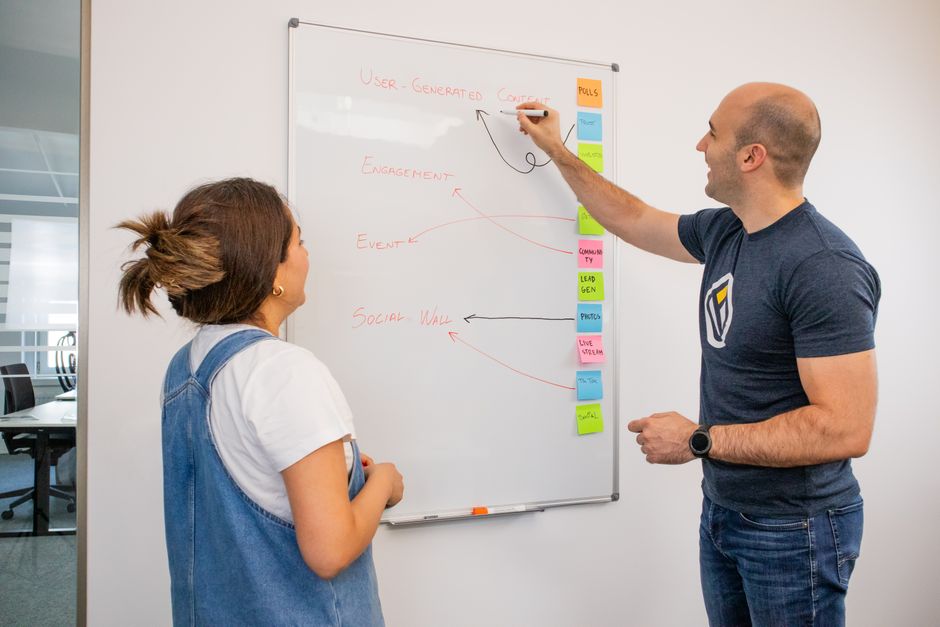
A process map is a simple list of steps, decision points, handoffs, and systems involved in one repeatable task. For example, an inbound lead might follow this path: a form submission arrives in a CRM; a salesperson checks the lead's company size and location; the salesperson writes a first reply; a manager approves the reply if the lead is above a certain value; the reply is sent; the lead is scheduled for a call. Each step has an owner, an input, an output, and a decision rule.

Once the map exists, classify every step into one of three categories:

- Human only — steps that require judgement, accountability, or legal responsibility. Examples: approving a refund above a threshold, signing a contract, or deciding whether a customer complaint is serious.
- AI assisted — steps where AI drafts, summarises, or suggests, but a human reviews and edits. Examples: drafting an email reply, summarising a support ticket, or suggesting tags for a document.
- Agent executable — steps where the AI may act without a human reviewing each output, because the action is low-risk, reversible, and well-defined. Examples: adding a label to a CRM record, moving a file to a folder, or sending a standard acknowledgement after a form submission.
This classification is the heart of a human-led AI operating model. It forces you to decide, step by step, where AI adds leverage and where it creates unacceptable risk. Do not skip this step. A tool that is agent-executable in one company may be human-only in another because of regulation, customer expectations, or the cost of an error.

Run a 30-day pilot on one workflow
Choose a workflow that is frequent enough to generate data, narrow enough to map in an afternoon, and reversible if the pilot fails. Good candidates include: triaging inbound emails, drafting social media posts from approved sources, summarising meeting notes, or enriching CRM records with public data. Bad candidates include: anything that touches payments, legal commitments, or high-stakes customer communication without a human gate.

Here is a step-by-step method, illustrated with an inbound lead workflow. This is an illustration, not a client result.

- Define the objective and the metric. For the lead workflow, the objective might be: reduce the time from form submission to first human reply without lowering reply quality. The metric could be median minutes from submission to first reply, measured over the pilot period.
- Map the current process. Write down every step, decision, and system. For the lead workflow: form submission → CRM record created → salesperson reviews → salesperson drafts reply → manager approves if value > $5,000 → reply sent → calendar link included.
- Classify each step. In this example: CRM record creation is agent-executable (the form already does it). Drafting the reply is AI-assisted (AI drafts, salesperson edits). Manager approval for high-value leads is human-only. Sending the reply is agent-executable only if the salesperson clicks "approve" and the system logs the action.
- Set permissions and escalation paths. The AI may draft replies for leads under $5,000, but the salesperson must approve before sending. For leads over $5,000, the AI may not draft at all; the manager handles it manually. If the AI is uncertain about a lead's industry, it escalates to the salesperson instead of guessing.
- Build the minimal integration. Use no-code tools or a simple API connection to let the AI read the form data and draft a reply in the CRM. Do not connect the AI to the email server yet. The salesperson copies the draft, edits it, and sends it manually for the first two weeks.
- Run for two weeks with a human gate. Every AI draft is reviewed. Log every edit the human makes. This tells you where the AI is weak and where it is reliable.
- Enable agent-executable sending for low-risk cases only. After two weeks, if the salesperson edits fewer than 10% of drafts for leads under $5,000, you may allow the AI to send the reply automatically, but only if the salesperson has pre-approved the template and the system logs the action. Keep the human gate for everything else.
- Measure and decide. At day 30, compare the metric to the baseline. If the time dropped and reply quality stayed the same, you have evidence to expand. If not, stop or adjust.
This method works because it separates the decision to automate from the decision to trust. You do not give the AI a blank cheque. You give it a narrow, logged, reversible action and watch what happens.

Approvals, logs, and escalation paths
Before any agent acts on a live system, three controls must exist: approvals, logs, and escalation paths.

Approvals mean a human or a rule set explicitly authorises the action. For example, an AI may draft a reply, but a human must click "send" until the pilot proves the drafts are reliable. For agent-executable steps, the approval is embedded in the rule: "If lead value < $5,000 and industry is in the approved list, send the standard reply." That rule is the approval, but it must be reviewed by a human before it goes live.

Logs mean every AI action is recorded with a timestamp, the input data, the output, and the human who approved the rule. If something goes wrong, you can trace exactly what happened. Logs are not optional. They are the difference between a controlled experiment and a black box.
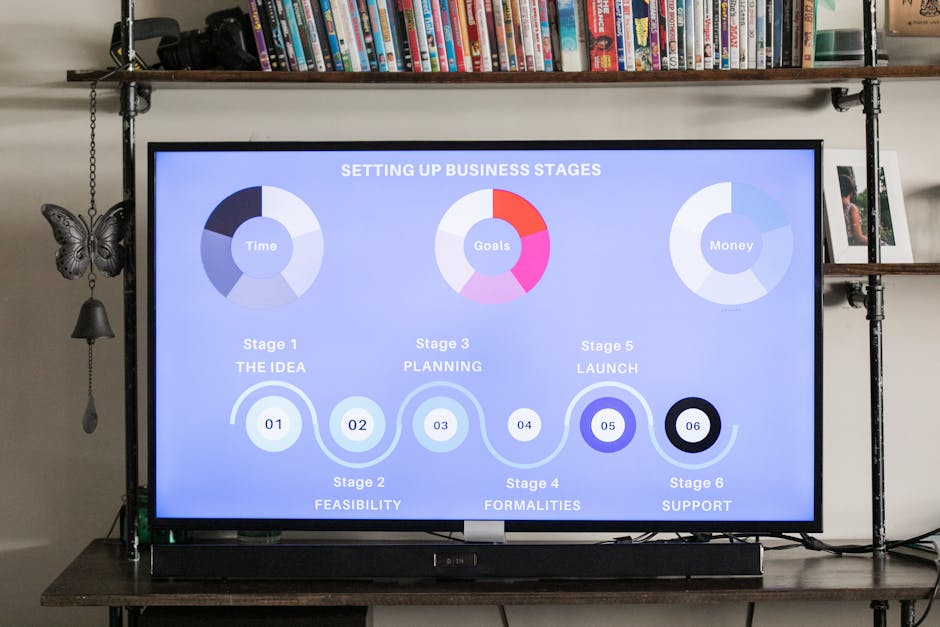
Escalation paths mean the AI knows when to stop and ask a human. Triggers include: low confidence in its output, a customer expressing anger or legal threat, a lead above the value threshold, or a request for information the AI has not been trained to handle. The escalation path must be a real person, not another bot.

These controls are not bureaucracy. They are the minimum viable governance for any AI that touches customer data or business processes. The National Institute of Standards and Technology's AI Risk Management Framework and the OECD AI Principles both emphasise human oversight and accountability for high-impact decisions. The Australian government's Voluntary AI Safety Standard similarly recommends that organisations define clear roles and monitor AI systems in operation. These are not legal requirements for every pilot, but they are sensible defaults.

What to do after the pilot
At the end of 30 days, you have three options: expand, adjust, or stop. Expand only if the metric improved and the error rate was acceptable. Adjust if the AI saved time but created new manual work, such as fixing bad drafts. Stop if the workflow was too complex, the data was too messy, or the team did not trust the output.

Do not scale to ten workflows because one worked. Scale to one more workflow, using the same mapping and classification method. The goal is to build a portfolio of small, well-governed automations, not a single monolithic agent that does everything.

If you are not sure where to start, bring one real workflow to a process review. I map the steps with you, classify each one, and identify the lowest-risk place to test AI. You can see what I am working on now at /now/, learn more about my background at /about/, or contact me to book a session.

FAQ
What is a human-in-the-loop AI workflow?
A human-in-the-loop AI workflow is a process where a person reviews, approves, or overrides AI outputs before they are finalised. This keeps humans accountable for consequential decisions while still allowing AI to accelerate repetitive tasks.
How do I choose the first workflow to automate with AI?
Choose a workflow that is frequent, narrow, and reversible. Good candidates include triaging inbound emails, drafting social posts from approved sources, or summarising meeting notes. Avoid workflows involving payments, legal commitments, or high-stakes customer communication without a human gate.
What approvals and logs should an AI agent have before it acts on live systems?
Before an AI agent acts on live systems, it should have explicit approval rules (either a human approves each action or a pre-approved rule set allows specific low-risk actions), comprehensive logs of every action with timestamps and inputs/outputs, and clear escalation paths to a human when confidence is low or the situation is sensitive.
How long should an AI automation pilot last?
A 30-day pilot is usually enough to test one narrow workflow. The first two weeks should use a human gate on all AI outputs; after that, you may enable agent-executable actions only for low-risk cases that meet strict criteria, with logging and escalation in place.
Sources
- AI Risk Management Framework — NIST
- OECD AI Principles — OECD
- Pilot Project Guide: How to Run a Successful Pilot — ProjectManager.com
- Running a Pilot Program for AI Implementation — IBM